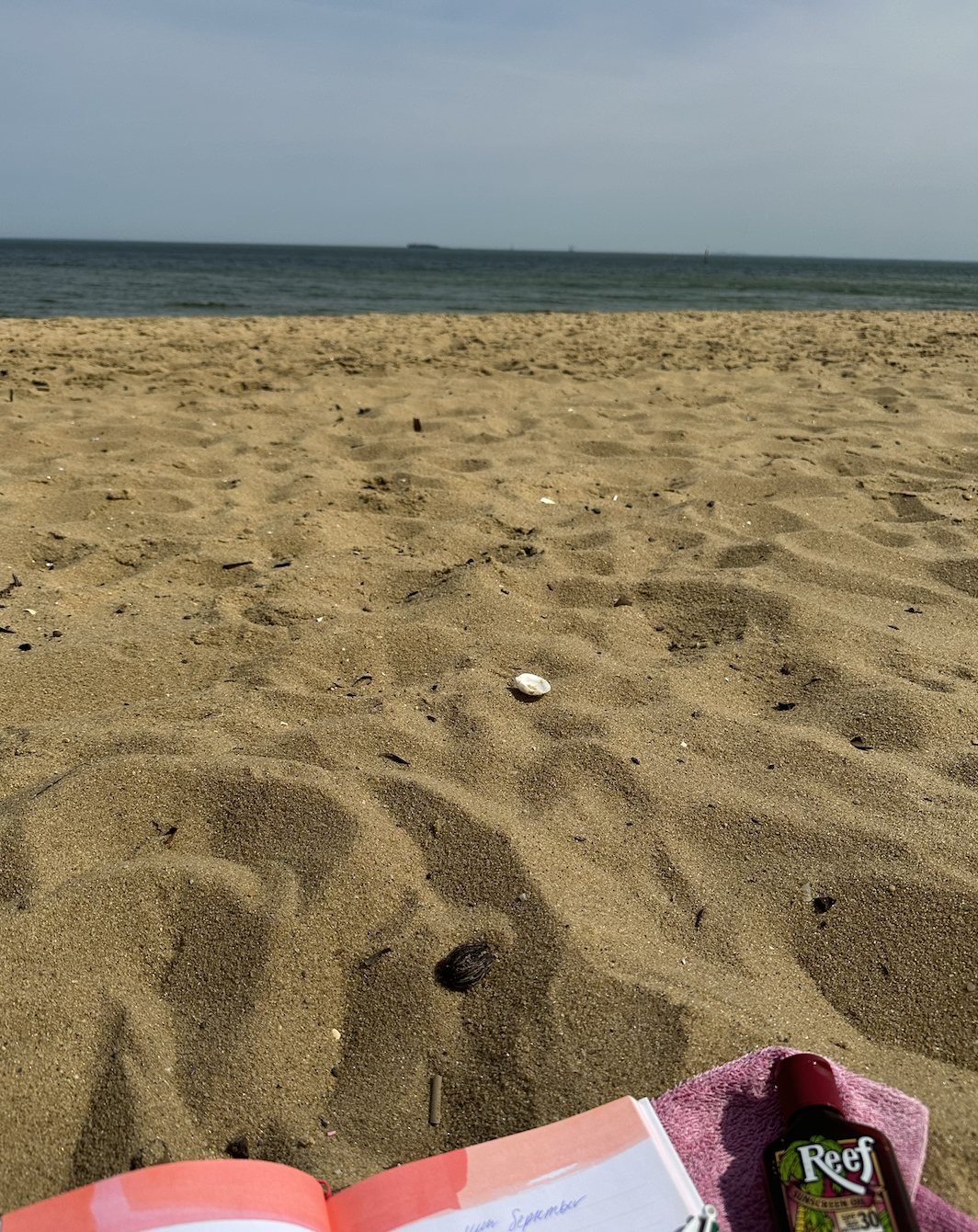
Summer, the season of the year in Australia. Where everyone is keen to get their tans on and beach bodies ready to lay on the sand. Baking and burning under the harsh UV rays where we rest sizzling our skin.
For the longest time, I thought spending hours sunbaking for a temporary tan that lasts the season was really worth it. Spending the winter months coating my body in fake tan and apologising to others over how pale my skin was once it had washed off.
Sticking out your arms and comparing your skin tone with girls in the high school yard to see who was the tannest. Winning this unofficial contest somehow brought a sense of admiration towards you, you were glorified. This was a common practice I saw at my predominantly white high school. After spending years trying to achieve the beauty standing, I realised it’s truly not worth it. With tanning becoming an ongoing social media trend, I’m left looking at all the negative impacts.
Bronzed, glowing, covered in freckles is the new beauty standard taking over the Australian youth in the summer. It is a dangerous and extraordinarily treacherous territory in which we know too much about to be going down that path.
Earlier this year the Australian Medical Association (AMA) began calling for restrictions on social media posts that are seen to promote harmful communications surrounding tanning habits.
AMA President Professor Steve Robson said it was horrifying that young Australians were being exposed to incorrect claims on social media that promoted tanning as a “great thing.”
“I am old enough to remember the slip, slop, slap messages and maybe it’s time that we brought back some sort of campaign like that again.” Professor Robson said.
Australians are particularly vulnerable to developing skin cancer within their lives as we live on the southern hemisphere which orbits closer to the sun. With one person being diagnosed with skin cancer every 30 minutes in Australia, over 66 percent of all Australians are expected to be diagnosed with skin cancer before the age of 70.
Where did all the sun knowledge and teachings that were embedded within us when we were younger go? Is social media influencing tanning culture and if so, how does it have such a firm hold on young Australians. From being a predominantly white country where being pale was the beauty standard, how and when did our nation decide suffering from cancer later in life is worth a tan when younger?
I spoke to Dr Joris Broeders, a doctor at Balgowlah Skin Cancer Clinic in New South Wales to hear more about these concerns.
Dr Broeders believes that young Australians “are getting more and more, body conscious,” and that it is one of the heaviest influences on tanning culture.
He also believes that people born in the “eighties and nineties” are tanning less “especially female patients.” He believes this is due to the knowledge of it “ageing their skin.”
He stressed, “that there is nothing healthy about a tan,” and that “you can get skin cancers at a really young age.”
Dr Broeders highlighted the crucial dangers that social media has on skin cancer whilst advocating for skin protection. Although this message is being silenced when social media trends take over.
During the summer I sat scrolling through my for you page on TikTok where I saw an endless and worrying amount of young Australian influencers on the app showcasing their tan lines. Scrolling through the comments, girls flooded them with praise over their tan lines. With so much admiration from young girls being tan who is responsible for educating them?
Dr Broeders commented that it is partly up to “family and friends” although “there’s a big role for general practitioners as well to make people aware of the dangers of the sun.” He emphasised the need for change in the way SunSmart measures are brought to us as right now there, “is a lot of traditional media being used.” He believes that we need to “try to start pathways through social media.”
Alyssa Fraser a 21-year-old university student spoke about her experiences with skin cancer when younger and the dangers on tanning.
“When I was 11, I saw a little blue dot on the back of my arm, originally thinking it was just a pen mark. But it started getting a bit bigger.” Ms Fraser said.
Her concerns grew and her mum took her to see a dermatologist who originally said, “it was no issue, and it won’t get any bigger than what it was.”
Unfortunately for Ms Fraser this wasn’t the case and in just two years she noticed the blue dot grow larger into “the size of a 20-cent coin.” She fortunately caught it early and was able to get it all cut out and sent off to the labs, coming back benign.
This goes to show that even extremely young Australians are being exposed to the sun far too often and without proper protection. Ms Fraser also commented on this being a wakeup call for her and admitting to no longer tanning anymore. Due to “the risk of getting skin cancer being far too great” for her. She advocated to, “just do a fake tan” because the risk of skin cancer outweighs the benefits.
Tanning alternatives have been around for ages, with many new formulas being created and improved. Although the potential streakiness and looking like a carrot has shown the downtrend of fake tanning. As well, the ingredients can cause allergic reactions for some and it’s generally a lengthy process.
You have half of the internet being divided by this currently with pale girls embracing their natural skin tones and ditching the tan and others embracing the sun-kissed tan from the harsh UV rays.
Grace Flynn wrote about her breakup with fake tan after she, “arrived in [her] early twenties questioning the absurdity of it all.” With Grace hopping on the growing hashtag #iquitfaketan that currently has over 1000 videos on TikTok.
However, many Australians prefer to lounge on the beach with a cold one in hand and get burnt by the strong UV. With sun doctor’s website stating that, “Between filters to mimic content creators sporting sun-kissed skin on social media, such platforms continue to reinforce the objective of golden glows in younger generations.” This reinforcing of the golden and glowing beauty standard is dangerous and more needs to be done about it.
With some social media trends being anti-sunscreen, this risk becomes so much more serious. With influencers on social media advocating against sunscreen and leaning into the lies and creating false claims regarding the chemicals which make up sunscreen. The biggest one is that sunscreen causes cancer. Although, this has been proven a myth as there is no medical evidence to support this claim.
With the recent companies like Bondi sands whose sunscreen has been taken off the shelves due to the SPF not working or bad chemicals being put in sunscreen, it puts a danger on those who are vulnerable to believing in the misinformation that spreads ferociously over social media.
I was worried about my previous tanning habits, so I took a trip to Mole Map in Carlton. Rachael Hodgson, a nurse at Mole Map gave me insight into the warning signs of a dangerous mole and the significance of sun protection.
Ms Hodgson said that they look for “really quick, fast changes over a really short period of time. [This might be] a change in shape of the mole, a change in colour, it might start bleeding, or it might become more raised than it was before as well.” She highlighted the importance of the good old, “Slip, Slop, Slap, Seek, Slide.”
She had also noticed a trend of clients admitting to using tanning beds also known as a solarium. Commercial solariums in Australia have been banned since 2015 and are illegal to operate commercially today. However, you may still purchase one under private ownership.
“I’ve seen a little bit of an increase with the younger generation using solarium beds or sunbeds. Being in a solarium for five minutes is equivalent to being in the sun for 20 hours and often when you’re using a solarium, you’re not going in protected with sunscreen on.” This is just one severe outcome of using a tanning bed she emphasised.
Ms Hodgson also believes that “social media has definitely increased the trend in tanning. It can be really dangerous when we’re using sunbeds or the sun to tan and that does increase our risk of skin cancer, especially being in Australia where our UV is already so high.”
The culture of tanning in Australia can no longer be ignored, with the statistics telling a gruelling story for many of our futures. It is imperative for the Australian government to take advice from the AMA and other healthcare professionals in order to regulate and change the way young Australians perceive tanning.
Embracing our natural skin tones and rejecting the harmful notion of an unhealthy tan is the way of the future for a healthy Australian.
 Sienna Seychell
Leave a comment